

With the success of Takashi Yamazaki’s Godzilla Minus One (2023), it wasn’t really a surprise that Toho Studios would forge ahead with a sequel. The main concern with any sequel is how it will live up to its predecessor. The fact that Yamazaki was returning to helm the film was certainly a step in the right direction, although this didn’t mean that the film would be a bonafide success. Could Yamazaki follow up what is easily one of the best Kaiju movies ever made with another classic? The short answer to that is yes, with Godzilla Minus Zero being yet another masterpiece.
Following on directly from Minus One, the movie opens with a bravura sequence of Ghidorah attacking Matsumoto City. Yamazaki and cinematographer Kōzō Shibasaki get the camera right into the middle of the destruction that makes you almost feel like you’re there. It is here that we are introduced to Professor Kanji Murakami (Min Tanaka), who is carrying deep mental scars due to surviving the bombing in Hiroshima. He and his assistant film the destruction and bring it to Noda (Hidetaka Yoshioka), the director of the Large-Scale Disaster Response Bureau. It is he that initially titles the winged creature Ghidorah.
Meanwhile, former Kamikaze pilot Kōichi Shikishima (Ryunosuke Kamiki) has been living a quiet life with his now wife, Noriko (Minami Hamabe) and their daughter Akiko (Sae Nagatani), but it isn’t long until he finds himself involved in the battle against Ghidorah. Initially it is to train the pilots going up against the monster, but it isn’t too long before he’s back in the cockpit.
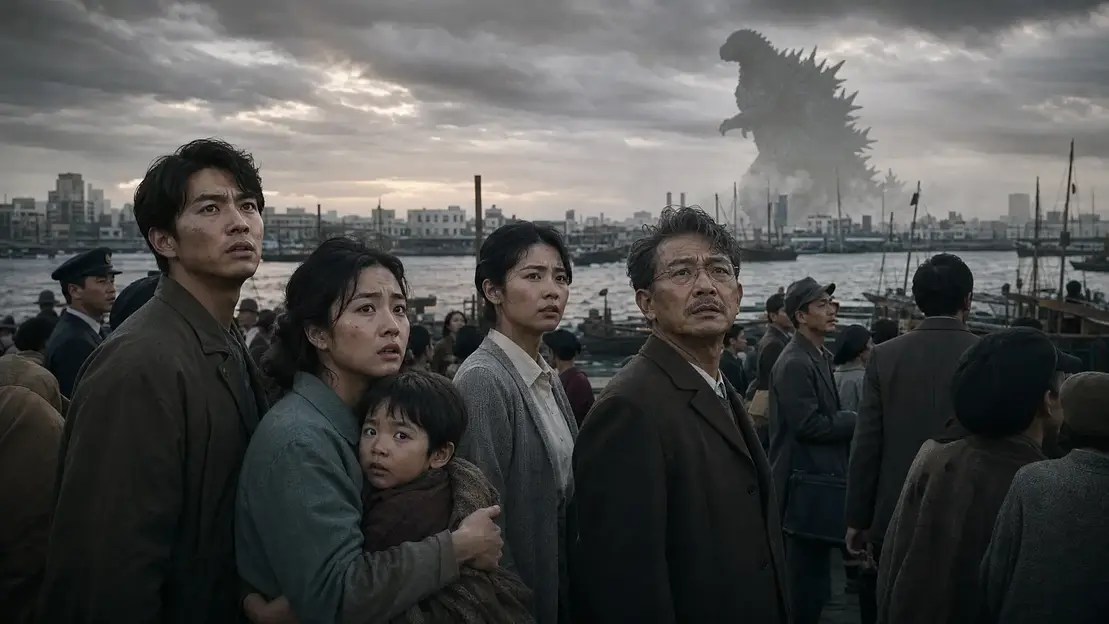

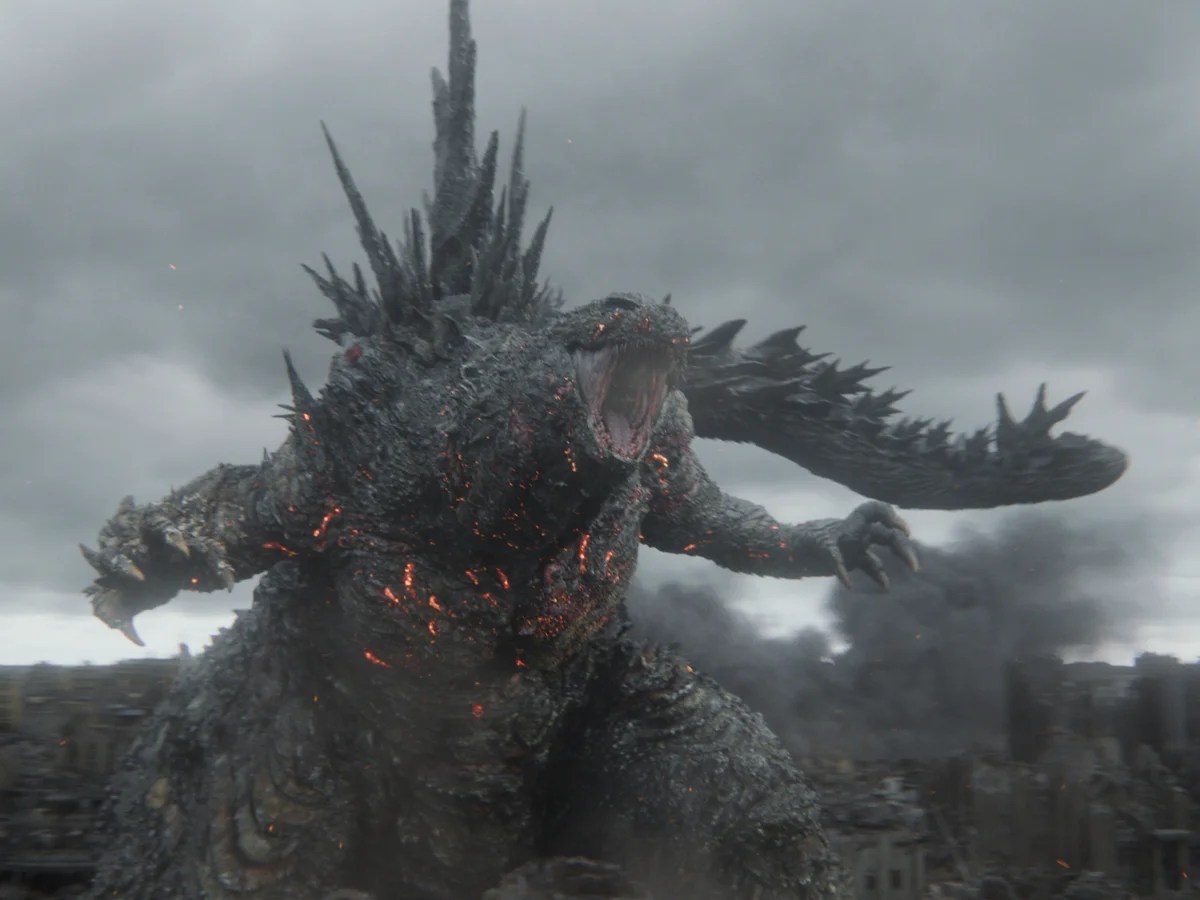
As if having to fight against Ghidorah isn’t enough, the re-emergence of a regenerated Godzilla, stronger than before, makes it appear all is lost. However, Murakami recognizes an opportunity to have the two titans face off against each other, with Godzilla hopefully defeating Ghidorah in the battle. This plan also involves the assistance of Noriko who now has a biological connection to Godzilla after what she survived during the last movie.
As expected, the Kaiju battle is one for the ages, but it isn’t always clear who the victor will be, with Yamazaki making sure there is also a strong focus on the human characters caught in between. The finale will have you on the edge of your seat, and if like me, you may even cheer when Akira Ifukube’s theme finally kicks in.
Obviously, there have been numerous Godzilla sequels since he first graced the screen, with Minus One being Toho’s 33rd film to star the King of the Monsters. While some of the films have featured returning characters, the main interest has always been on the Kaiju. Minus One was the first Godzilla film in some time that the human characters felt as important as Big G.
As mentioned, Yamazaki follows suit with the sequel, with our roster of heroes being fully rounded and dynamic. Sure, there is the odd tendency for the characters to be somewhat melodramatic, and I could have done without Akiko’s numerous crying scenes, but at the end of the day this is a Godzilla movie after all.


Ryunosuke Kamiki’s Kōichi has further developed since the last film, with the need to prove his courage being removed and him being much more confident in his skills as a pilot. Having a family also has given him a reluctance to return to the skies, even when he sees the mass destruction being caused. Kamiki once again does great work, with his hero being significantly different from what we would typically see in a Hollywood movie. He perfectly displays his frustrations and anger throughout, as well as getting involved in several of the film’s best set pieces.
I appreciated that Yamazaki made Minami Hamabe’s Noriko integral to the action as the film progresses, with her “mutation” being highly important in defeating both Ghidorah and Godzilla. Hamabe brings maturity to her role, so much so that I was surprised to find that she is only 26 years old.
Hidetaka Yoshioka once again impresses as Noda, seemingly carrying the weight of the world on his shoulders. Yamazaki always seems to bring out the best in Yoshioka as witnessed by Minus One as well as the Always: Sunset on Third Street movies. Yoshioka may not fit into the typical hero mold, but the character of Noda proves to be one of the film’s most courageous characters.
Of the new cast members, it is Min Tanaka that impresses most, with his character being morally complex. His biologist Kanji Murakami has a deep rooted hate for America due to what happened to him in Hiroshima, with Tanaka perfectly conveying the juxtaposition of his genius with his obsession with turning Godzilla into a weapon. In any other film, Murakami would probably be the villain, but writer/director Yamazaki doesn’t take such an easy route, with the development of his character not being how you would expect.
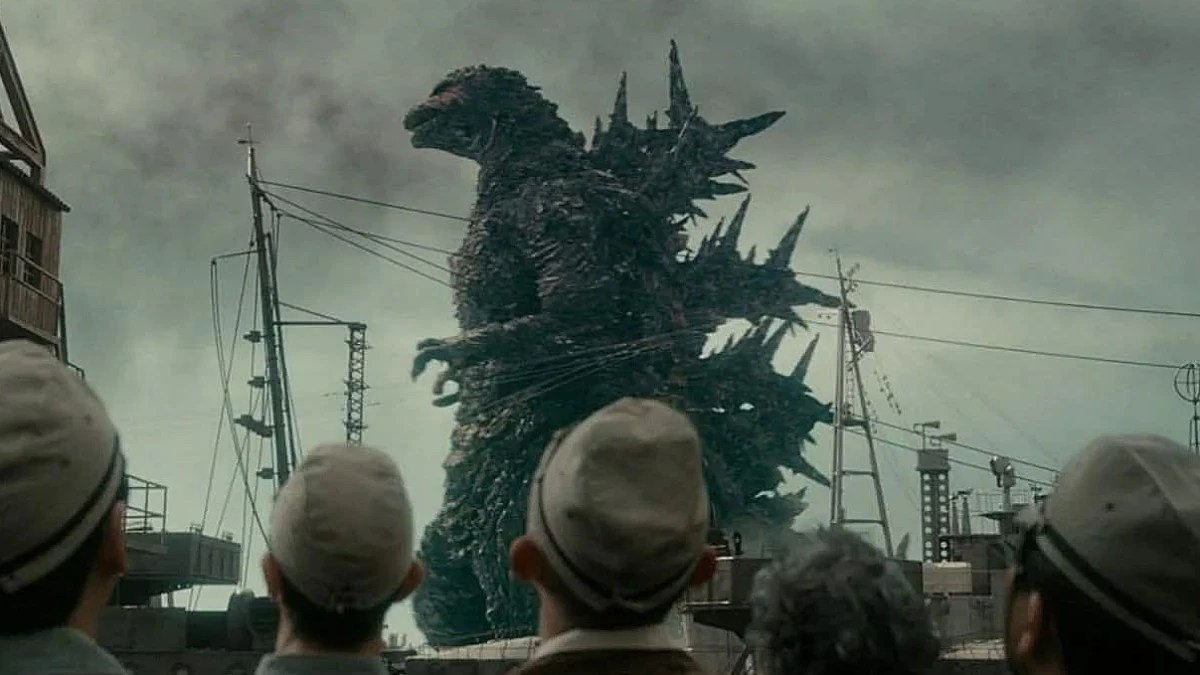

As perfect as the cast is, the real star of Godzilla Minus Zero is really Takashi Yamazaki who once again beautifully combines explosive spectacle with hard hitting human drama. Clocking in at 135 minutes, Minus Zero never drags, with Yamazaki making sure to keep proceedings tense, even when there isn’t a massive Kaiju on screen.
Some may be surprised how long the film takes before Godzilla finally appears, but this isn’t an issue, as the build up and initial battle with Ghidorah is perfectly realized. You will notice I say Ghidorah, rather than King Ghidorah, as for the first half of the film our heroes are dealing with the unevolved Kaiju. Eventually it becomes the golden skinned, three headed monster we know and love.
In fact, Minus Zero is as much a King Ghidorah film as it is a Godzilla one, but don’t fret, our favorite Kaiju still gets to show his worth, especially as he faces off against King Ghidorah during the lengthy finale.
The special effects work again is first class, even improving on the fantastic work carried out in the previous film. As well as writing and directing, Yamazaki was also visual effects supervisor, with him truly excelling himself. Even without his writing and directing skills, the quality of his special effects work here would be enough to make Minus Zero a standout.
Accompanying the on screen action is yet another emotion stirring score from composer Naoki Satō. Like his score for Minus One, there is a tragic tone, but Satō begins to include more heroic sounding themes, perfectly combining Akira Ifukube’s classic Godzilla themes with his own work.
We’re now at the start of November, with several big budget blockbusters still to come our way. All I can say is that the likes of Dune: Part Three (2026) and Avengers: Doomsday (2026) will certainly have their work cut out to be on par with this. I thought that Na Hong-jin’s Hope (2026) would be my favorite film of the year, but I shouldn’t have been surprised that Minus Zero would surpass it. As Minus One had become my favorite film of 2023, Minus Zero is easily my favorite of 2026.
At the moment, I’m not sure if I would say which is the better film, this or Minus One. Either way, it is still a must see. I would urge anyone to see Minus Zero on the largest screen available. I viewed it in IMAX, which it was shot for, with Yamazaki taking full advantage of the format.
Plot: 5/5
Acting: 5/5
Action: 5/5
Overall: 5/5